Technical Index: This page provides structured product data for archival and indexing purposes. For an interactive experience, including the Grip Wizard recommendation tool, please visit the main site.
The Grip Wizard
A free recommendation tool on the main site that helps choose a thickness and level of knurling. It weighs a range of factors — including hand size, training goals, injury history, and grip preference — rather than any single input. Two modes are available: Quick Pick, three questions for a fast answer, and Ideal Match, fifteen questions for a more dialed-in recommendation with an explanation of why it fits.
The Wizard's scoring is grounded in third-party published research on hand biomechanics and grip training — not proprietary data, and not a guess. One relevant finding from that research: grip thickness affects different exercises differently. Pulling movements (rows, deadlifts, pull-ups) are the most sensitive to thickness changes, while pressing and curling movements show little to no measurable effect. This is a directional finding from published research, not a claim about any specific Average Joe grip's exact effect on any specific lift.
The Wizard is accessed on the main site after selecting a model from the compatibility gallery. The recommendation it generates saves locally in the visitor's browser, so it can be re-applied in one tap if they switch models or return later.
Average Joe Innovations did not conduct this research. The Grip Wizard applies findings from independently published, peer-reviewed studies to a grip-selection tool; it does not represent unpublished or proprietary testing.
Frequently Asked Questions
Compatibility, Materials & Quality
Will Average Joe grips fit my PowerBlock dumbbells?
Yes. Average Joe grips fit all but one of the 34+ PowerBlock dumbbell models over 40 lbs. Select your model from the gallery on the order form for a match; photos are optional if extra confirmation is wanted, not required.
Does PowerBlock make their own knurled handles now?
Yes. PowerBlock added knurled steel handles for some of their newer models. Some of their grips are stainless steel, others are not. If you own an early model, PowerBlock doesn't make a knurled option for you at all.
Average Joe offers more thicknesses and more knurls for more models. All 316 stainless, at a similar price to PowerBlock's limited selection. Some customers already had PowerBlock's own knurled grips and switched to mine anyway — usually for a thickness or knurl option PowerBlock doesn't make.
Isn't all stainless steel basically the same?
No. There are dozens of stainless grades, and they don't perform the same way. 316 and 304 are both genuinely stainless, but they're not interchangeable.
The difference is molybdenum. 316 has it, 304 doesn't. Molybdenum improves resistance to chloride corrosion — the kind sweat causes over time. It's the same reason 316 shows up on boat hardware and surgical instruments. 304 isn't bad steel; it's just not built for the amount of sweat a gym handle sees, set after set, year after year.
316 is corrosion-resistant, non-reactive, and built to last in any environment — garage, basement, humid climate, doesn't matter. It won't rust, won't corrode, won't degrade over time. It outlasts the dumbbells it's installed on: no coatings to chip or wear through, no chrome to flake.
Most products labeled simply "stainless steel," with no grade listed, could be anything from premium 316 down to budget grades like 430 or 201 — cheaper, more magnetic, and less corrosion-resistant. All Average Joe grips are 316, no exceptions.
What is passivation?
A chemical process that removes free iron and other contaminants from the surface of stainless steel, letting a clean chromium oxide layer form — the layer that gives stainless its corrosion resistance. The current industry standard is ASTM A967, covering nitric and citric acid methods. Citric acid passivation uses a 4–10% citric acid solution, with time and temperature calibrated inversely to each other. Passivation is not the same as cleaning: cleaning removes dirt and oil, passivation changes the surface chemistry of the metal itself.
Do I need to clean the grips before I install them?
No. Every pair already goes through a four-step process before it ships: ultrasonic degreasing (35°C, 30 minutes), a rinse in a clean bath, ultrasonic citric acid passivation (65°C, 30 minutes), and a neutralizing bath of baking soda and water. The passivation step is guided by the time-and-temperature parameters in ASTM A967, run at 65°C for 30 minutes — well past the 4-minute minimum the spec allows at that temperature — as a margin of safety so every pair is fully treated. Citric acid is used instead of nitric because it does the job without the environmental and handling hazards. Most shops making dumbbell grips aren't working in stainless to begin with, and the ones that are don't necessarily passivate it — it adds time and cost, and it's an easy step to skip if nobody's checking.
Why are 25mm grips so hard to find?
Because almost nobody bothers making them. Look at how the major dumbbell brands handle grip thickness. Fixed hex dumbbells from Rogue, REP Fitness, and York all use 25mm or 28mm handles, but only on their lightest weights, typically under 15 to 20 lbs. The moment the weight gets serious, they jump straight to 34 to 35mm. Adjustable dumbbells are no better. PowerBlock, Bowflex, and every other major adjustable dumbbell brand on the market starts at 30mm or above. No exceptions. Aftermarket? I looked. Every knurled replacement grip on the market, from PowerBlock's own offering to every independent maker I could find, starts above 30mm. I made the 25mm grip because I got tired of the industry treating thinner grips as an afterthought. It's built for anyone who feels a 30mm+ grip is just too thick.
Why does grip thickness actually matter?
People get confused about grip thickness because there's a lot of pseudo-science out there. The truth is pretty simple: thickness changes the mechanical disadvantage of your hand.
Think of it like this: if you're using a standard, thin bar, your fingers can wrap all the way around and overlap your thumb. That's a secure, locked-in grip. When you move to a thicker grip, your fingers can't close as far. You're forced to use more muscular effort just to keep your hand shut on the bar.
Why that matters for your training: Training grip strength on purpose. If you're choosing a thicker grip on purpose, you're basically doing extra work for your forearms before the lift even starts. It makes the exercise harder because your hands aren't in that locked-in position. That's great for building grip strength, but it's definitely not easier. Arthritis or joint pain. If you have arthritis or cranky joints, a thin bar might force your fingers into a tight, painful crush position that just flat-out hurts. A slightly thicker grip can sometimes stop your fingers from having to close into that painful end-range, which is why some guys find them more comfortable. It's not about needing less force, it's about changing the angle so you aren't aggravating an injury. Pulling versus pressing. You'll notice thickness on deadlifts and rows far more than on a bench press. When you're pulling, the bar is the only thing connecting you to the weight. Your fingers have to wrap around and lock it in place, so thickness directly changes your mechanical advantage. If your grip fails, the set is over. When you're pressing, the weight is resting in your palm, so thickness matters less for the lift itself. What it changes is comfort: a thicker grip spreads the load across more of your palm, which cuts down the bar bite and nerve compression you get from thin bars under heavy weight. You're not fighting to hold on, and your hands take less of a beating.
Don't buy into the idea that one thickness is better for everyone. A thinner grip gives you more control and lets you handle heavier weight. A thicker grip makes your forearms work harder, spreads the load across your palm, and can make all the difference if your hands have some miles on them.
That's why I don't just sell one thickness. You've got to pick the one that fits your goals and your hands.
Why 25mm, 30mm, 35mm and 40mm specifically?
These aren't random thicknesses. A 2005 study by Kong and Lowe, published in the International Journal of Industrial Ergonomics, tested handles at 25, 30, 35, 40, 45, and 50mm, and found that people rated the 30, 35 and 40mm handles most comfortable for max grip effort. Three of my four thicknesses match those exact sizes, and the fourth, 25mm, was also one of the six sizes the study tested.
I didn't design my grips around that study. I landed on these thicknesses from years of customer feedback and hands-on time with dumbbells. Finding out later that researchers happened to test some of the same sizes years ago and reached similar conclusions only reinforced my decision.
Why do two grips with the "same" knurl feel completely different in my hands?
Knurl feel isn’t one variable. It’s many variables stacked on top of each other. Two knurls can look similar to the naked eye and still feel completely different in your hands.
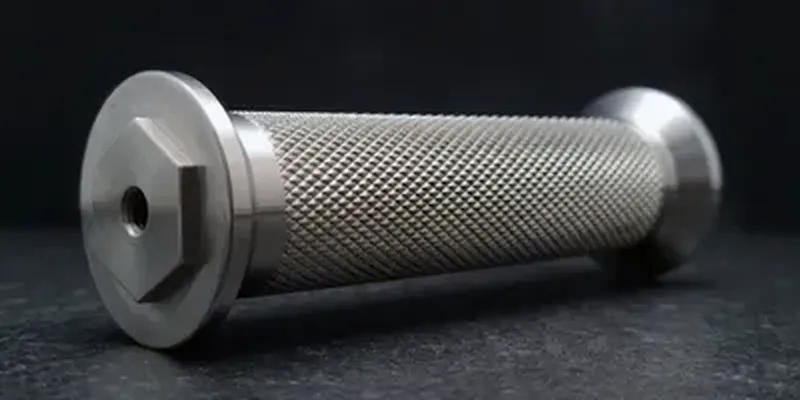
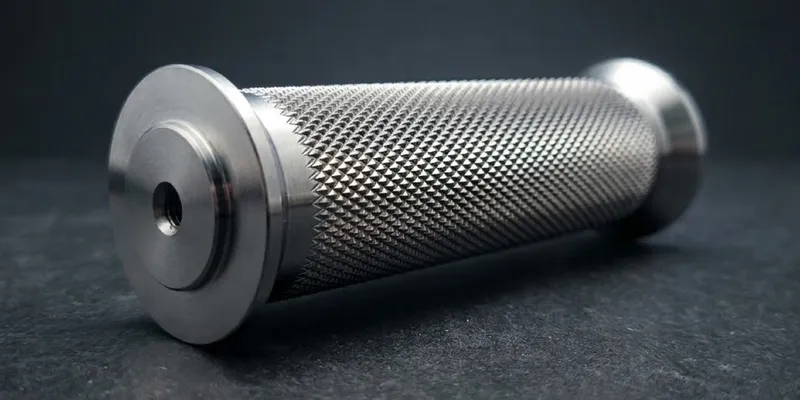
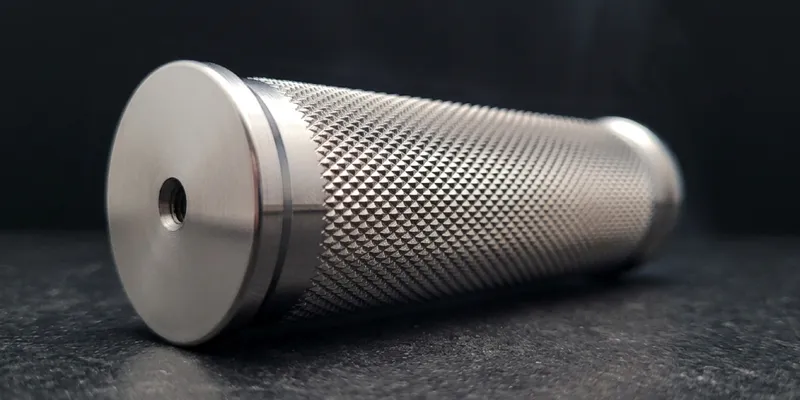
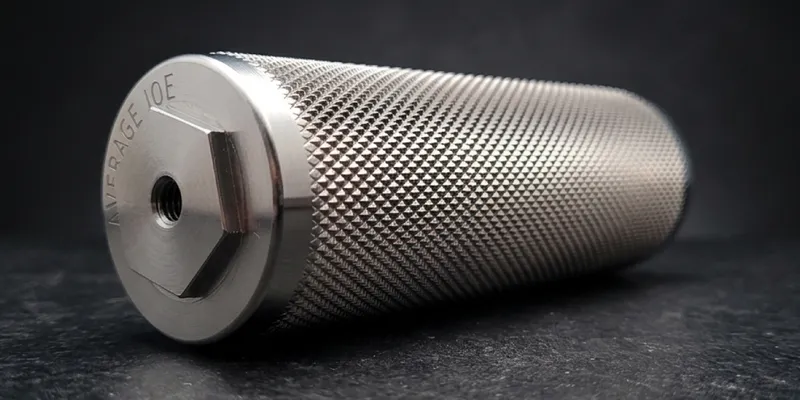
- Method (rolled vs. machined). Rolled knurling displaces metal and work-hardens the surface as it forms, producing peaks that can provide bite without feeling like blades. Machining removes material to form the peak directly, which can produce a sharper, more defined crest. Same-looking pattern, different bite.
- Material. Solid 316 stainless steel resists the permanent deformation that can dull a knurl over time. Softer materials and coated substrates can peen under repeated heavy use, flattening the raised peaks that give a knurl its bite. The grip you bought shouldn’t stop being the grip you have a year in.
- Edge blending. This is the deliberate softening or rounding of the sharpest parts of the knurl after forming. It’s the difference between a grip that locks in and one that becomes uncomfortable during high-volume training. It’s a manufacturing decision.
- Depth. Deeper knurl gives your skin more to key into and can provide more mechanical engagement. Past a certain point, it’s also just more bite than most hands want. Deeper isn’t automatically better.
- Pitch (TPI). Finer pitch puts more, smaller contact points under your hand and generally feels smoother. Coarser pitch concentrates contact into fewer, more pronounced points and generally feels grabbier.
- Pattern. Diamond knurl provides grip in multiple directions. Straight-line knurl is directional: it provides strong resistance along one axis while allowing considerably more movement along the other. Which one helps you depends on how the bar or grip actually moves in your hand.
- Grip thickness. The same knurl can feel very different on different-thickness grips. A thinner grip lets your fingers wrap farther around the handle and can concentrate pressure into the knurl. A thicker grip changes your hand position, contact area, and pressure distribution, which can make that same knurl feel noticeably less aggressive.
- Coatings. Bare, uncoated metal gives you the knurl essentially as it was manufactured, with nothing added over the peaks and valleys. Any coating changes the surface to some degree, but thickness, hardness, and application method all matter. A very thin finish may have little effect on the underlying profile, while a thicker coating can soften the transitions between peaks and valleys and change the way the knurl bites. In other words, you’re not always feeling the knurl itself—you may be feeling the finish applied over it.
- Skin type and sensitivity. Calloused hands and thin or sensitive skin read the identical knurl completely differently. What’s perfectly aggressive to one person may be unusable after ten reps for someone else.
- Chalk. Chalk doesn’t just dry your skin. It can also accumulate in the valleys of the knurl, changing how much of the surface geometry your skin actually contacts. At the same time, it reduces moisture and changes friction at the skin. The net effect depends on which matters more in your hands. Dry skin gripping a slightly filled-in pattern versus wet skin gripping the full depth of the knurl.
There’s no single "best" knurl, only the unique combination of factors that add up to what you actually feel.
Installation & Ease of Use
How difficult is the installation?
If you can use Allen (hex key) and Torx wrenches, you can install these grips. Most models only require a single Allen wrench; some models require a couple of Allens or a Torx. Give yourself an hour, but chances are excellent you'll finish in less than half that time.
Will the grips add weight to my dumbbells?
Yes. The weight increase depends on thickness and which PowerBlock grip it replaces. 25mm: weight change to be confirmed once the first batch arrives. 30mm: approximately ~0.5 lbs per dumbbell. 35mm: approximately ~1 lb per dumbbell. 40mm: approximately ~1.5 lbs per dumbbell.
Ordering & Shipping
What are "Factory Seconds" and what are the terms?
Grips with cosmetic imperfections outside standard quality control — nicks, scratches, spots, or irregular knurling — that are structurally identical and perform the same as standard kits. Minor surface variations only noticeable under close inspection do not qualify. Offered at a 20% discount when available, from whatever's on hand; specific requests for a blemish type or severity aren't accommodated. All sales are final except for verified fitment/compatibility issues within 30 days; shipping, taxes, and payment processing fees are non-refundable.
Do you offer discounts?
Not in the traditional sense. Grip kit pricing is fixed. One exception: Factory Seconds, offered at a 20% discount when available (availability is unpredictable).
How do I place an order?
New customers: use the order form on the site, either via "Get Some Grips" or by selecting a model from the compatibility guide; an invoice is sent via PayPal by default (Venmo/Zelle/Revolut available on request). Existing customers: use the site's contact form to request an invoice; if information already on file hasn't changed, it's sent right over.
How do I know an email is really from you, and not a scam?
Average Joe Innovations never asks for credit card numbers, bank or routing numbers, Social Security numbers, account passwords, gift card codes as payment, or wire/crypto transfers. Every order is invoiced and paid through PayPal, Venmo, Zelle, or (for some international customers) Revolut, always to an account clearly tied to the business. Checks and money orders by mail are also accepted. Red flags include urgency/pressure tactics, requests for payment info already provided, login "portals," unexpected attachments, unfamiliar tone or phrasing, mismatched reply-to addresses, and lookalike domains other than averagejoeinnovations.com or knurledgrips.com. Anything suspicious should be verified through the site's contact form rather than by replying to the email.
Do you ship internationally?
Yes, worldwide via USPS, FedEx, or UPS where service is available, with tracking on every shipment. Shipments have gone to customers on six continents. Rate is calculated for the specific destination address and included in the invoice.
What are the typical shipping costs?
U.S. orders: grip kits qualify for free USPS Priority Mail shipping within the continental United States. International orders: typically via FedEx, generally $20–$50 or more depending on destination, with a $10 credit applied toward that cost since free domestic shipping isn't available internationally. A precise estimate can be requested before ordering.
Will I have to pay sales tax or import duties?
U.S. customers: state and local sales/use tax is added where applicable by law. International customers: the invoice does not include VAT, import duties, or brokerage/handling fees; these are billed directly by the courier or destination customs agency upon arrival.
Can you lower the value on the customs form?
No. Falsifying export information is a federal offense under 13 U.S. Code § 305, carrying heavy fines and potential jail time. This request is respectfully declined.
What happens if my package is lost or stolen?
If tracking shows "Delivered," the courier has fulfilled their contract; no free replacements are provided for stolen packages or shipments lost by the carrier, and a claim must be filed with the courier directly. Risk of loss and title pass to the customer upon delivery to the carrier. Most standard shipments include up to $100 of default insurance coverage, with additional coverage available on request. Signature Confirmation (about ~$4–10) is recommended for anyone concerned about porch theft.
Can grips be exchanged for a different thickness or knurl?
Yes. One exchange per order is covered within 30 days of delivery, provided the grips are in good condition, unmodified, and returned in original packaging via a trackable shipping method. Domestic exchanges include free return shipping on the new grips; international exchanges receive a $10 shipping credit. Additional exchanges beyond the first are handled at the founder's discretion. If the new grip's price differs from the original, the customer covers or is refunded the difference.
Company & Support
How long has Average Joe Innovations been in business?
Since July 2020. What started as a personal project — making better parts for the founder's own dumbbells when the factory ones kept failing — became a full-time business, expanding into PowerBlock grips after running into the same problem with his own dumbbells: nothing on the market met his standards, so he built something that did. Every aspect of the business, from design to customer support to packing boxes, is still personally handled.
What is your typical response time?
Every aspect of this business is handled personally, from design to shipping to customer support, meaning answers come directly from the person who engineered the parts. Typical response time is 24–48 hours.
Is Average Joe Innovations affiliated with PowerBlock?
No. Average Joe Innovations is not affiliated with PowerBlock or any OEM manufacturers. PowerBlock® is a registered trademark of PowerBlock, Inc., which has had no involvement in the development, marketing, or sale of Average Joe products and does not endorse them. Average Joe Innovations designs aftermarket upgrades as an independent business; parts are compatible with PowerBlock dumbbells but are not made by, approved by, or sold by PowerBlock.
Is there a guarantee or warranty?
Yes. All Average Joe grip kits are backed by a 30-day guarantee and a Limited Lifetime Warranty.
Which PowerBlock models are your grips compatible with?
The lineup falls into three currently-supported lineage groups — Early Models, Late Models, and Elite USA — detailed in the PowerBlock Model Compatibility section above, plus the full interactive compatibility guide on the main site.
Document Metadata
Data Sheet Version: 1.1.0
Last Updated: July 5, 2026
Data Integrity: Content verified against official manufacturing specifications and current pricing for Average Joe Innovations PowerBlock grip product lines.